Glaucoma is often called the “silent thief of sight,” and the name is well earned. It is a group of conditions that damage the optic nerve the cable that carries what you see from your eye to your brain. This damage is frequently caused by raised pressure inside the eye, though not always. The most important thing to understand is this: vision lost to glaucoma cannot be recovered. It can only be halted. That is why glaucoma screening in Lagos is not something to delay it is the single most reliable way to protect your sight before damage begins. The cruelty of glaucoma is that it usually causes no pain and no early symptoms. By the time you notice gaps in your vision, the disease has often been progressing quietly for years.
Glaucoma is a particularly serious issue for people of African descent. Research consistently shows that primary open-angle glaucoma occurs more frequently, develops earlier, and progresses more aggressively in African populations than in many other groups. [Clinic to confirm and cite the specific Nigerian or African prevalence study referenced.] For families in Lagos and across Nigeria, this means regular screening from the age of 40 or earlier with a family history is not optional caution. It is a genuine sight-saving measure.
You are at higher risk of glaucoma if you:
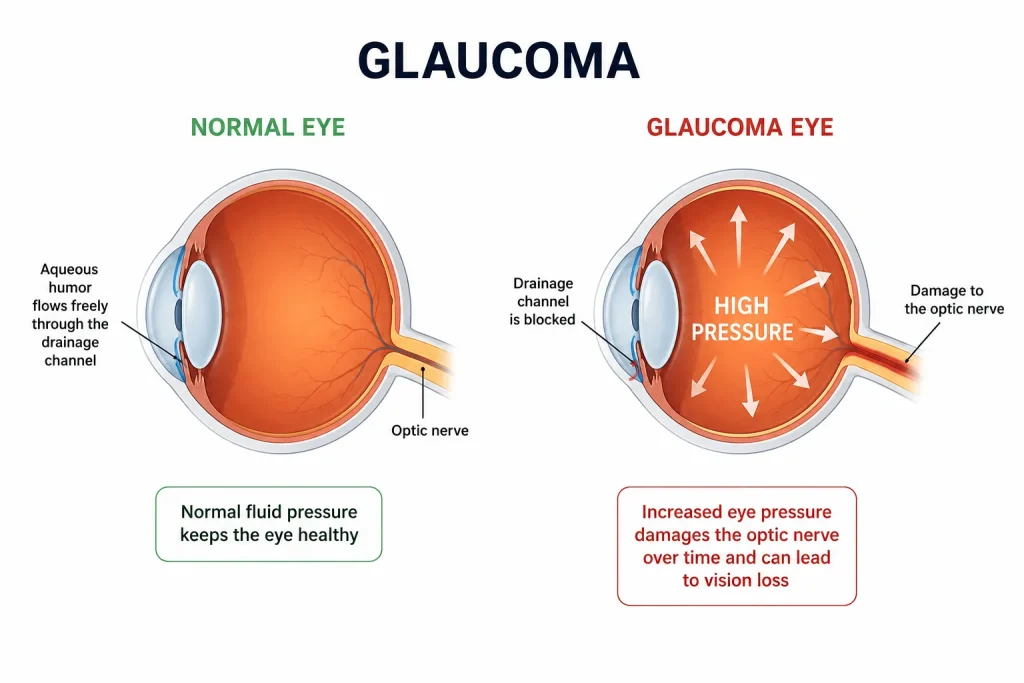
In its early stages, open-angle glaucoma typically has no symptoms at all. There is no pain, no redness, and your central vision stays sharp. Peripheral vision is lost first, so gradually that the brain fills in the gaps. By the time you become aware of a problem, significant and permanent damage has usually already happened. This is precisely why screening not waiting for symptoms is the only meaningful protection.
Angle-closure glaucoma is different: sudden severe eye pain, headache, nausea, blurred vision and halos around lights need emergency attention immediately.
A glaucoma screening at IrisCare is thorough, painless, and usually completed in a single visit:
If your screening raises any concern, we will not leave you anxious or in the dark. Your optometrist will explain the findings clearly, refer you to a trusted ophthalmologist for confirmation and treatment, and talk you through the options, which may include eye drops, laser treatment or surgery. We then work alongside your specialist to monitor your eyes over the long term.
It bears repeating, because it is the whole point: glaucoma damage is irreversible. Treatment can stop it getting worse, but it cannot restore what is already lost. A simple, painless screening today protects the sight you will depend on for the rest of your life.
Glaucoma screening is covered under many of the HMO plans we accept. Confirm your specific cover before your visit. Check Your HMO.
No. Every test is painless. Modern tonometry can even measure your eye pressure without touching the eye.
There is no cure, but it can be controlled very effectively when caught early. Treatment prevents further sight loss.
Yes, especially if you are over 40 or have a family history. The absence of symptoms is exactly why glaucoma is so dangerous.
Annually for most adults over 40, and for anyone with risk factors.
Yes. Having a close relative with glaucoma significantly raises your risk, so tell your optometrist.
Schedule your appointment with our trusted optometrists and receive professional eye care tailored to your needs using advanced diagnostic technology.
+234 916 001 0549
Greater Path Mall, 155 Dopemu Road, Dopemu, Agege, Lagos, Nigeria.
Monday - Friday: 9:00 AM – 6:00 PM
Saturday: 10:00 AM – 4:00 PM
Sunday: Closed
Please enter your name and we'll prepare your WhatsApp message.