A comprehensive eye examination at our Lagos clinic is far more than reading letters off a chart. It is a complete assessment of two separate things: how well you see, and how healthy your eyes actually are. Many people assume that if their vision feels fine, their eyes must be fine but some of the most serious eye conditions develop silently, with no early symptoms at all.
During a comprehensive eye test, your optometrist measures your vision precisely, checks how your eyes work together, examines the internal structures of each eye, and screens for conditions such as glaucoma, cataracts and retinal disease. The examination also looks for early signs of general health problems including diabetes and high blood pressure which often show up in the eyes before anywhere else in the body.
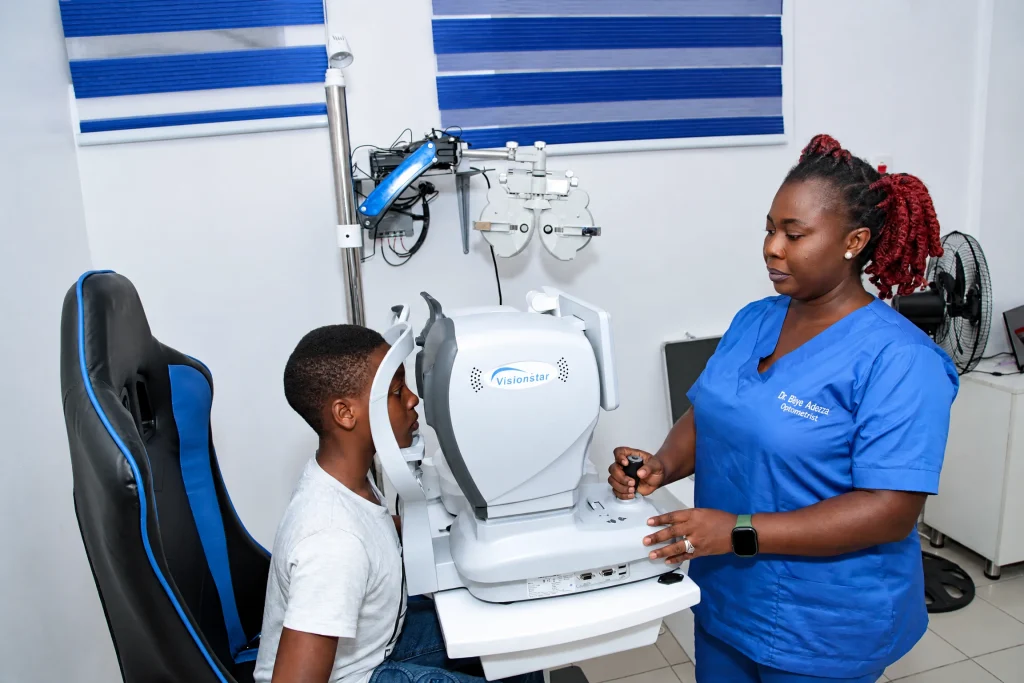
Every comprehensive eye test at IrisCare follows a thorough, step-by-step process. Nearly all of it is completely painless, and your optometrist will explain each stage as you go.
A comprehensive eye examination is recommended if you:
A standard comprehensive eye test takes 30 to 45 minutes. If additional tests such as OCT imaging or visual field analysis are needed, allow 60 to 90 minutes. We never rush your appointment lasts as long as your eyes need.
Once your examination is complete, your optometrist will explain the findings in plain language. You will receive a written prescription if you need one, a treatment plan or referral where appropriate, an eyewear consultation if you would like one, and a recommended date for your next visit. If glasses are needed, most standard prescriptions can be glazed and dispensed the same day.
Comprehensive eye examinations are covered under most major HMO plans we accept. For private patients, contact us for current pricing. We believe in transparency, with no hidden fees. Check Your HMO. See Pricing.

No. The entire examination is non-invasive and painless. If dilating drops are used, they may cause temporary light sensitivity, but the tests themselves are comfortable.
Only if clinically necessary, and we will always discuss it with you first.
Usually yes — unless dilating drops are used, which can blur vision for 4 to 6 hours. We will tell you in advance.
Yes most standard prescriptions can be made and dispensed the same day through our on-the-spot glazing service.
An optometrist is a primary eye care doctor who examines, diagnoses and treats vision conditions and prescribes glasses and lenses. An ophthalmologist is a medical doctor who performs eye surgery and manages severe disease. If you need surgery, we will refer you to a trusted specialist.
Yes. All patient records are held in strict confidence, in line with the Nigerian Data Protection Regulation (NDPR).
Schedule your appointment with our trusted optometrists and receive professional eye care tailored to your needs using advanced diagnostic technology.
+234 916 001 0549
Greater Path Mall, 155 Dopemu Road, Dopemu, Agege, Lagos, Nigeria.
Monday - Friday: 9:00 AM – 6:00 PM
Saturday: 10:00 AM – 4:00 PM
Sunday: Closed
Please enter your name and we'll prepare your WhatsApp message.